MeidasTouch
Episode overview

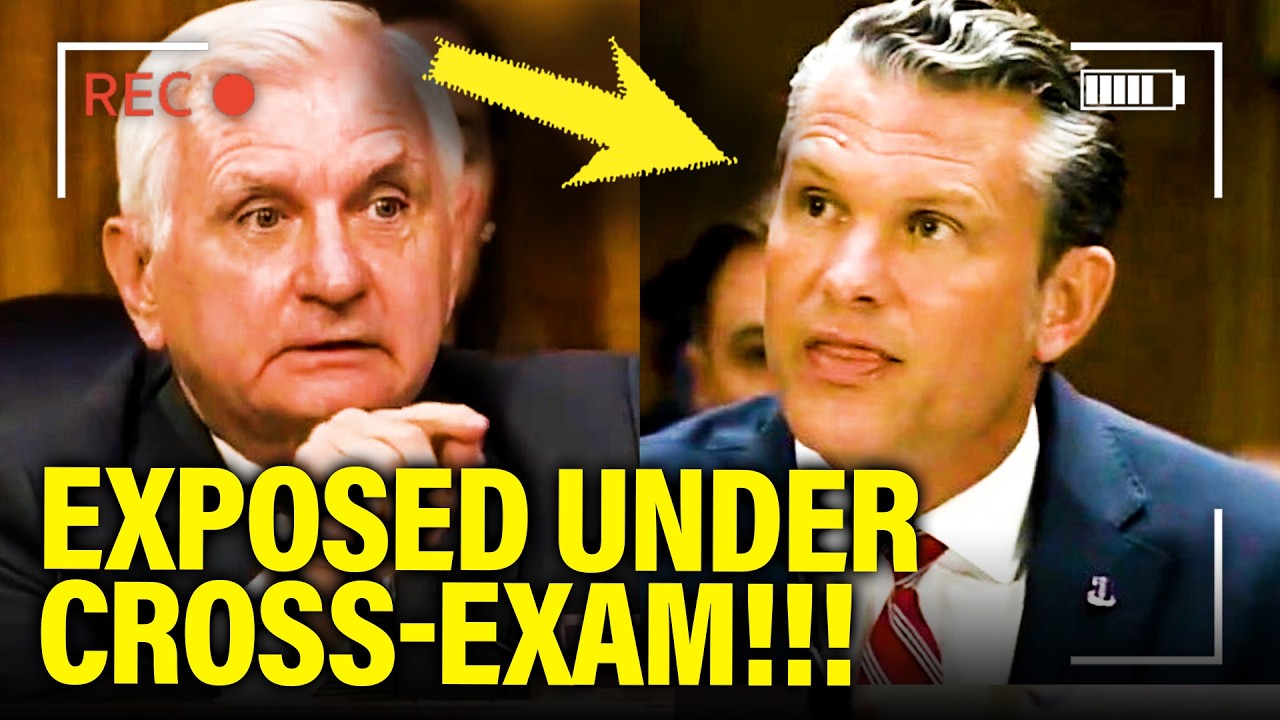
Hegseth GETS EXPOSED under CROSS-EXAM at Senate Hearing

MeidasTouch · 21 July 2026 · 25m · 2 Egleze moments
Hegseth GETS EXPOSED under CROSS-EXAM at Senate Hearing ▶

What happened in this episode?

MeidasTouch reviews and excerpts a US Senate hearing featuring Defense Secretary Pete Hegseth and senior military leadership on the war in Iran and US defence funding. In the clips presented, Democratic senators repeatedly challenge Hegseth’s past public characterisations of the conflict, including earlier claims that Iran’s military had been “destroyed”, rendered “combat ineffective”, and that the operation achieved “every single objective”; Hegseth does not give direct yes-or-no answers to some of the questions. Senators also press the administration’s request for an emergency supplemental, with Sen Dick Durbin highlighting a $87.6bn request alongside roughly $75bn in unobligated Department of Defense funding from a prior package.

On regional escalation and maritime security, senators question conditions in and around the Strait of Hormuz, including conflicting political messaging about tolls and the extent to which Iran can disrupt commercial traffic. In another exchange highlighted by the programme, Republican Sen Kevin Cramer asks whether Russia and China are helping Iran; Hegseth says both countries are, at different levels, “enabling” Iranian actions, while insisting the details should remain classified. Sen Tammy Baldwin raises allegations from injured service members she met at Walter Reed, claiming gaps in immediate medical care and traumatic brain injury screening after an attack; Hegseth disputes that characterisation and says every effort was made. A senior commander, Gen Kane, cautions that air power has limits and declines to discuss hypotheticals on ground escalation.

What are the key points?

Which topics are covered?

How is this page sourced?

Programme
MeidasTouch
Published
21 July 2026
Duration
25m
Original episode
Open the original source ↗

Egleze verifies the speaker, source and timestamp for each linked moment. Unless a moment is explicitly marked independently verified, statements remain attributed claims by the named speaker rather than established facts.

Watch original episode More from MeidasTouch

2 moments from this episode

Source-linked · editorially selected
01
Politics

Durbin says Hegseth confirms Pentagon has $75bn in unobligated funds

at 7:43 · Attributed speaker claim
Mr. Secretary, I'd like to ask you to help me reconcile some numbers. It's my understanding that this whole supplemental funding request is 87.6 billion and most of the funding 67 billion is for the Department of Defense. Yet, we are told the Department of Defense still has 75 billion in unobligated funding from last year's reconciliation package. Is that true? Um, roughly correct numbers. Yes.

Sen Dick Durbin says Pete Hegseth confirmed the Pentagon still has about $75bn in unobligated funds while the administration seeks an emergency supplemental of $87.6bn, including $67bn for DoD. Durbin questioned why new funding is needed if that money remains unspent. Hegseth said the numbers were “roughly correct” but did not give a detailed breakdown in the exchange.

02
Geopolitics

Hegseth tells Senate Russia and China are ‘enabling’ Iran’s actions

at 16:04 · Attributed speaker claim
Um are Russia and China uh helping Iran and if so, how? Well, Senator, as the chairman alluded to, there's definitely adversary alignment uh attempts to do so. uh and there are many ways that we deter that. Some of which are and and the depth and extent of it ought to remain classified and it should but there are ways in which both of those countries are limiting at different levels uh enabling some of the things Iran is doing. Yes.

In Senate testimony, US Defense Secretary Pete Hegseth said Russia and China are, at different levels, “enabling” some of what Iran is doing, while arguing the “depth and extent” should remain classified. The exchange came in response to a question from Sen Kevin Cramer about whether Moscow and Beijing are helping Tehran.