Mike Drop
Episode overview

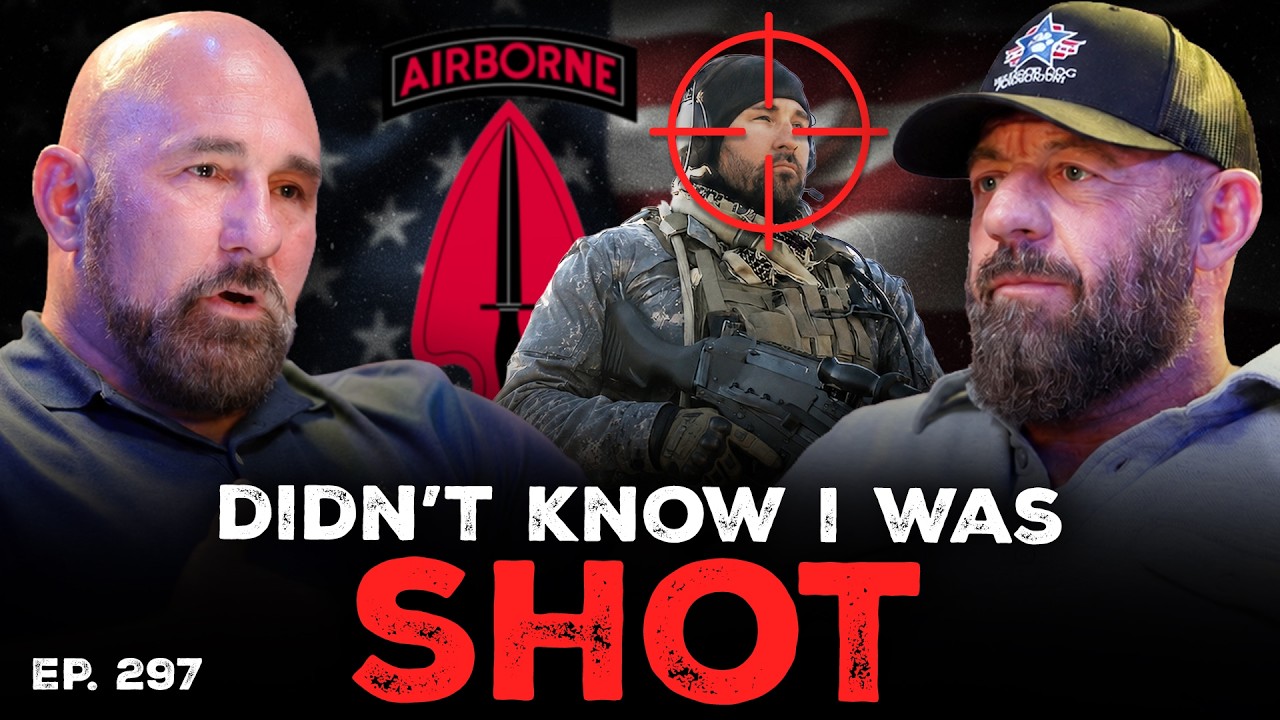
GREEN BERET Did Field Surgery on His Own Arm With No Doctor & Stayed in the Fight | Ep. 297 | Pt. 1

Mike Drop · 23 June 2026 · 5 Egleze moments
GREEN BERET Did Field Surgery on His Own Arm With No Doctor & Stayed in the Fight | Ep. 297 | Pt. 1 ▶

What happened in this episode?

On this episode of The Mike Drop Podcast, host Mike Ritland sits down with Jay Collins, the Lieutenant Governor of Florida and former 23-year Army Special Forces veteran now running for Governor. Collins is a two-time Purple Heart recipient who lost his leg in combat and later overcame bureaucratic opposition to remain on active duty as an amputee Green Beret. The conversation opens with Collins discussing his reading habits and leadership philosophy drawn from Lincoln, then shifts into his military background. Raised by his grandparents on a failing Montana farm after being born to a 16-year-old mother, Collins joined the Army as an intelligence specialist in 1996 before earning his way into 7th Special Forces Group. The core of the interview focuses on his 2006 Afghanistan deployment to Firebase Anaconda, where he was shot in the arm during a coordinated enemy assault. Collins reveals that foreign fighters—Chechens, Syrians, and Iranian-backed forces—were using night vision superior to U.S. equipment and employing advanced small-unit tactics. After performing field surgery on himself when weather prevented medevac, he returned to combat within a month. Years later, undiagnosed blast injuries from a mortar strike led to the amputation of his leg in 2010. Collins recounts the bureaucratic nightmare at Walter Reed, where he was forced to complete sexual harassment training on crutches before receiving care because his classified service didn't appear in Army records. General Ray Odierno personally intervened, enabling Collins to re-qualify in every Special Forces skill and serve five more years, including standing up the Office of Strategic Warfare's medical training program. The episode closes with Collins reflecting on his transition to Florida politics and his commitment to defending constitutional freedoms.
What are the key points?

Which topics are covered?

How is this page sourced?

Programme
Mike Drop
Published
23 June 2026
Original episode
Open the original source ↗

Egleze verifies the speaker, source and timestamp for each linked moment. Unless a moment is explicitly marked independently verified, statements remain attributed claims by the named speaker rather than established facts.

Watch original episode More from Mike Drop

5 moments from this episode

Source-linked · editorially selected
01
Military

Special Forces Medic Performed Self-Surgery in Afghan Firebase Under Fire

at 36:37 · Attributed speaker claim
We ended up opening my arm up right through here in the firebase in Afghanistan and doing a partial fasciotomy to restore the circulation. It was actually me and our junior medic, our weapons guy, and an engineer. We did a block on the elbow, a block on the shoulder. We opened it up.

Jay Collins described performing emergency surgery on his own arm at Firebase Anaconda after being shot, with only a junior medic, weapons sergeant, and engineer assisting. The weather had closed the landing zone for days, forcing the team to conduct a fasciotomy without a surgeon to restore circulation and prevent total limb loss.

02
Military

Green Beret Reveals Foreign Fighters Used Advanced Night Vision in Afghanistan

at 40:25 · Attributed speaker claim
We pulled some— we were using 7 Bravos at the time. Some of them had 14s and even beyond that, far better equipment than we had for night vision. When you started seeing that infusion of money, you knew this whole thing was shifting.

Jay Collins, former 7th Special Forces Group member, revealed that enemy fighters in Afghanistan possessed PVS-14 night vision and better optics than U.S. forces at Firebase Anaconda, indicating significant foreign support. He identified Chechens, Syrians, and Iranian influence supplying advanced equipment and training. This contradicts public narratives about the technological superiority of U.S. forces during the war.

03
Military

Army Amputee Forced to Complete Sexual Harassment Training Before Medical Care

at 56:44 · Attributed speaker claim
I showed up. I hadn't done my annual training in their eyes since 2008. They made me go up to a library. I'm on crutches, I don't have a leg. I refuse to be in a wheelchair, so I'm crutching around this stupid hospital. They're like, 'Well, you got to do your annual training right here. You got to do your sexual harassment and all of this.'

Lieutenant Governor Jay Collins recounted arriving at Walter Reed after leg amputation from combat injuries, only to be told he couldn't receive care until completing years of missed administrative training because his classified unit assignments weren't in regular Army records. The bureaucratic nightmare highlighted systemic failures in supporting tier-one operators transitioning to medical care.

04
Military

Collins Claims Army Chief Odierno Personally Intervened to Save Career

at 58:46 · Attributed speaker claim
Ray Odierno said exactly what he meant. He followed through, and he's really probably the single person who gave me the chance to stay in the Army. He called the Sergeant Major of the Army, who then called my boss, my boss's boss, my boss's boss's boss's boss, all the way up the food chain.

Jay Collins credits General Ray Odierno with personally overriding Army medical retirement policies to allow him to remain on active duty after amputation. Odierno initiated a chain of command intervention after encountering Collins doing one-legged box jumps at Walter Reed, forcing the Army to create a requalification pathway for amputee Special Forces soldiers.

05
Military

Collins Built Classified Medical Program After Being Told Career Over

at 1:03:02 · Attributed speaker claim
We developed a course that actually gave them paramedic skill sets for our operators. It gave them a set formulary. We started to build out this entire apparatus to build medical support within the 4th Battalions. We saved lives within, I think it was like 90 days of the first class.

After amputation, Jay Collins led development of the NS Med course, training non-medical Special Operations personnel in advanced paramedic skills to support singleton operators and Jedburgh teams downrange who had no organic medical capability. The program deployed capabilities that saved lives within 90 days and launched multiple civilian training companies.