Lewis Howes School of Greatness
Episode overview

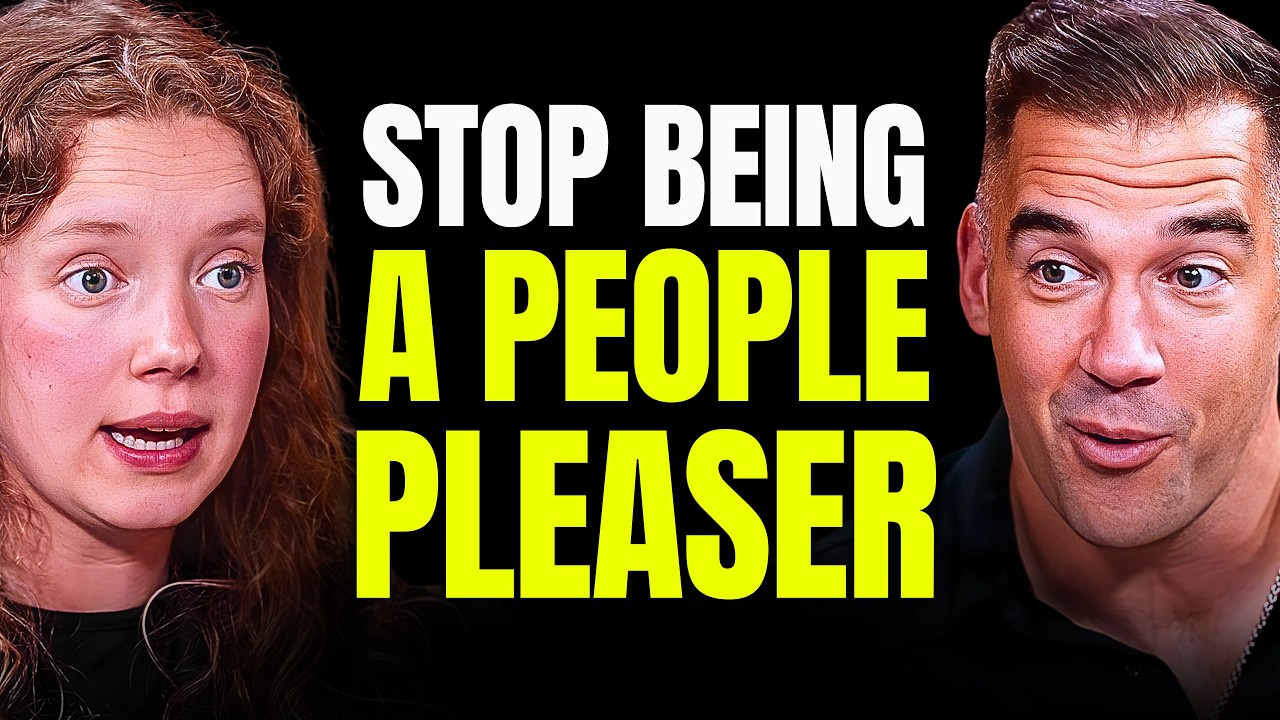
Stop Living for What Others Think of You | Meg Josephson

Lewis Howes School of Greatness · 5 Egleze moments
Stop Living for What Others Think of You | Meg Josephson
Episode summary

On this episode of The School of Greatness, host Lewis Howes interviewed licensed psychotherapist and New York Times bestselling author Meg Josephson about her book Are You Mad at Me? and the psychology of people-pleasing. Josephson argued that chronic approval-seeking stems from a modern threat response called the fawn response, where individuals appease perceived threats to feel safe, a pattern uniquely reinforced by society. She revealed that most people pleasers were parent pleasers first, developing hypervigilance in homes with unpredictable or critical caregivers, and that complex trauma results not from single events but from repeated micro-moments without parental repair. The conversation explored how this pattern manifests in six distinct archetypes: the peacekeeper, performer, perfectionist, chameleon, lone wolf, and caretaker. Josephson distinguished reassurance-seeking from validation, explaining why constantly asking 'are you mad at me' exhausts relationships while providing only temporary relief. She shared her personal journey through people-pleasing, describing how a serious college concussion forced her to confront her use of alcohol as a control-release mechanism, leading to nearly eight years of sobriety. The episode provided practical guidance on breaking people-pleasing patterns, emphasizing the importance of increasing tolerance for emotional discomfort, starting boundary-setting with safe relationships, and practicing repair with future children. Josephson argued that healing requires bringing unconscious patterns into awareness through pausing and self-reflection rather than seeking perfection. She closed by emphasizing three core principles: nothing is personal, nothing is permanent, and nothing is perfect.

Key points
Watch original episode More from Lewis Howes School of Greatness

5 moments from this episode

Source-linked · editorially selected
01
Psychology

Therapist Links People Pleasing to Fawn Response, a Modern Threat Adaptation

Licensed psychotherapist Meg Josephson explained on The School of Greatness that people pleasing stems from the fawn response, a modern threat response distinct from fight, flight, or freeze. Unlike primal survival mechanisms, the fawn response involves appeasing perceived threats through approval-seeking behavior. Josephson argues this response is uniquely reinforced by society through praise for being agreeable, embedding it deeply in nervous systems.

Read this moment →
02
Psychology

Childhood Complex Trauma Rooted in Lack of Parental Repair, Not Incidents

Josephson revealed that complex trauma develops not from single events but from repeated micro-moments where children never receive repair after conflict. She described how her father would never apologize after volatile episodes, leaving her to internalize blame repeatedly. This pattern creates the core belief that drives chronic shame and people-pleasing behaviors into adulthood.

Read this moment →
03
Psychology

Most People Pleasers Were Parent Pleasers First, Therapist Claims

Josephson identified the origin of adult people-pleasing behavior in childhood dynamics with unpredictable or critical caregivers. She explained that children learn their safety depends on managing parental moods, creating hypervigilance that becomes embedded in their nervous system. This contradicts the common assumption that low self-esteem causes people-pleasing, reversing the causality.

Read this moment →
04
Relationships & Family

Reassurance Seeking Versus Validation: Why Asking Are You Mad Creates Exhaustion

Josephson distinguished between reassurance-seeking and validation-seeking in relationships, explaining why constant questions like 'are you mad at me' exhaust both parties. Reassurance provides only temporary relief because it requires the other person to repeatedly soothe anxiety without addressing root emotions. True validation involves naming the underlying feeling and having a genuine conversation rather than yes-or-no questions.

Read this moment →
05
Health, Longevity & Biohacking

Concussion in College Forced Therapist to Stop Drinking, Changed Spiritual Path

Josephson revealed that a serious concussion during college was the turning point in her relationship with alcohol and her healing journey. The injury forced her into silence and darkness, stopping her pattern of using alcohol to release control after rigid, perfectionistic behavior during the day. She views the concussion as spiritually significant, ultimately leading to nearly 8 years of sobriety.

Read this moment →