Episode summary
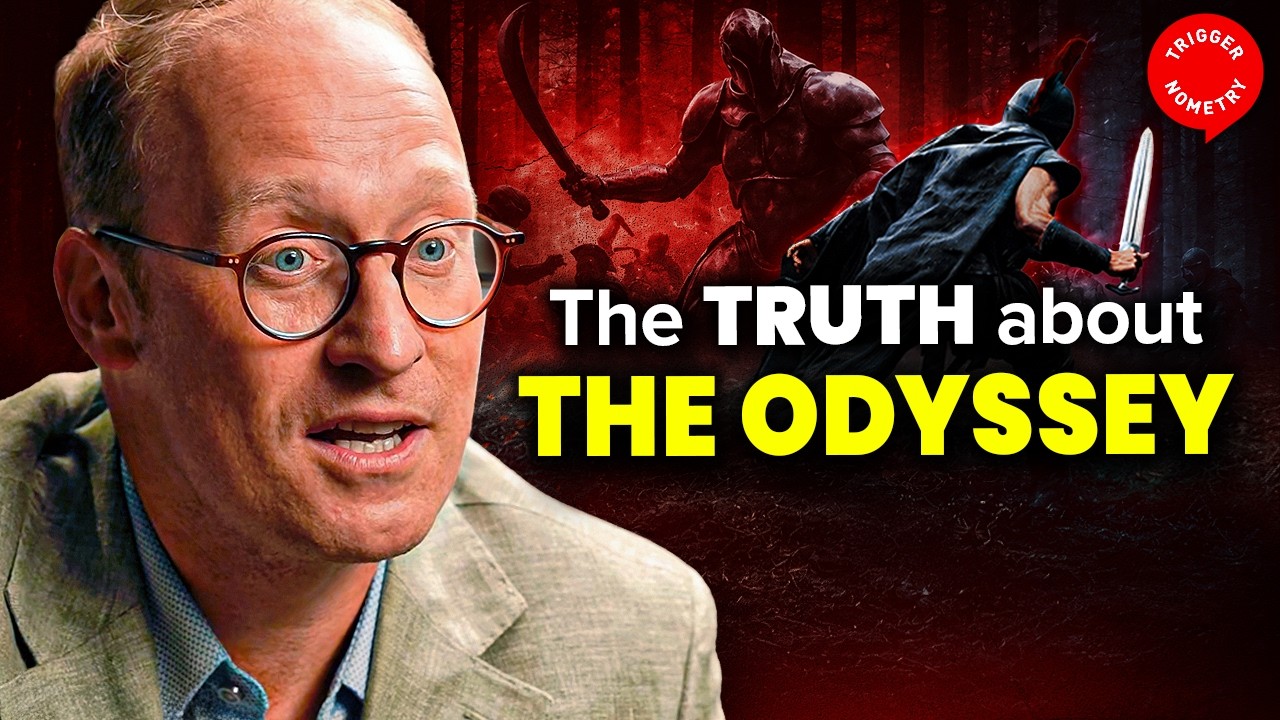
Triggernometry hosts Konstantin Kisin and Francis Foster speak with classicist David Butterfield about Christopher Nolan’s forthcoming adaptation of Homer’s Odyssey and what the poem is “actually about”. Butterfield says Nolan has publicly stressed “historical realism”, and he outlines how that ambition sits uneasily with a story built around gods, monsters and mythic geography. A significant early section focuses on casting controversy, especially the reported casting of Lupita Nyong’o as Helen; Butterfield argues that, while Homer offers little physical description, epithets and the implied Mediterranean setting make the choice “striking”, and he contends it would have been “inconceivable” for a Bronze Age Spartan queen to be sub‑Saharan African.
The conversation then turns to the poem’s central themes: nostos (the return home), identity, hospitality, temptation and the costs of glory. Butterfield retells major episodes including the Cyclops, the Lotus Eaters, Circe, Helios’s cattle, the Phaeacians, and Odysseus’s return to Ithaca, emphasising the hero’s cunning as both virtue and flaw. He describes the reunion of Odysseus and Telemachus and frames the Odyssey as a critique of the “beautiful death” ideal associated with the Iliad, citing Achilles’ underworld speech.
Later, Butterfield discusses what is and isn’t known about Homer’s authorship, arguing Homer likely existed as an Ionian poet drawing on a long oral tradition. He also claims Greeks wrote an open letter to Hollywood complaining that Nolan’s Odyssey casting includes no Greek actors. The episode ends with discussion of what modern societies can learn from Greek literature and philosophical self-examination.