Julian Dorey Daily
Episode overview

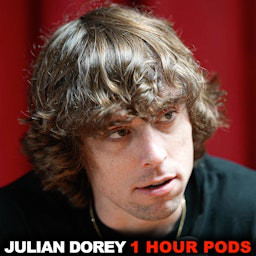
Inside Russia's Secret "Super Soldier" Research (And The Death That Followed)

Julian Dorey Daily · 16 October 2026 · 1h 0m · 3 Egleze moments
Inside Russia's Secret "Super Soldier" Research (And The Death That Followed) ▶

What happened in this episode?

Julian Dorey interviews physician Dr Bakri about peptides, circadian biology and the fast-growing consumer market for injectable compounds. The conversation begins with sunlight exposure, vitamin D and the guest’s broader argument that modern indoor life and blue-light exposure disrupt hormonal rhythms linked to sleep, libido and stress hormones. They discuss PT-141 (bremelanotide), which Dr Bakri describes as FDA-approved for hypoactive sexual desire disorder, alongside anecdotes about dosing effects and side-effects.

A major section focuses on Soviet- and Russian-origin peptide research. Dr Bakri names Vladimir Khavinson and claims—without offering evidence—that Vladimir Putin was “known for years” to receive drugs from the researcher. He also says the Ukraine war shut down the factory producing Thymalin, a Russian-approved peptide drug he associates with Soviet military and space programmes, affecting access for his practice.

On regulation and safety, Dr Bakri warns that “natural” peptides can still be dangerous at the wrong dose, criticises what he calls “scammy” incentives in some longevity clinics, and describes an online “research use only” loophole for direct-to-consumer peptide sales. He estimates—again without presenting data—that $10–$20bn worth of research-grade peptides may have been sold in the past year.

Separately, Dorey says his show publicly stopped running gambling adverts, after reflecting on addiction risks for listeners, during a discussion that links blue-enriched lighting to reduced loss aversion in a small study.
What are the key points?

Who is speaking?

Named speakers identified in Egleze's source-linked moments from this episode.

Which topics are covered?

How is this page sourced?

Programme
Julian Dorey Daily
Published
16 October 2026
Duration
1h 0m
Original episode
Open the original source ↗

Egleze verifies the speaker, source and timestamp for each linked moment. Unless a moment is explicitly marked independently verified, statements remain attributed claims by the named speaker rather than established facts.

Watch original episode More from Julian Dorey Daily

3 moments from this episode

Source-linked · editorially selected
01
Geopolitics

Guest claims Vladimir Putin received drugs from peptide researcher Vladimir Khavinson, who later died

Unidentified guest · at 15:28 · Attributed speaker claim
So, Vladimir Putin was getting was known for years to get drugs from this doctor. This doctor created like 20 30 different supplements and drugs.

Guest discussing Russian peptide research claims Vladimir Putin was “known for years” to receive drugs from researcher Vladimir Khavinson. The guest and host then speculate about Khavinson’s death about a year after an award photo, without providing corroborating evidence beyond conjecture.

02
Media & Journalism

Julian Dorey says his show stopped running gambling adverts

Julian Dorey · at 32:50 · Attributed speaker claim
We very publicly split with gambling ads like back in April or May >> and like we won't [ __ ] do it. We won't touch Polyark or we won't touch any of this stuff.

Host Julian Dorey says he stopped running gambling advertising after previously doing reads for DraftKings and PrizePicks, citing concerns about encouraging addictive behaviour among listeners. He says the show publicly split with gambling ads “back in April or May” and would not take similar deals going forward.

03
Health, Longevity & Biohacking

Guest says some longevity clinics are financially incentivised to over-prescribe peptides

Unidentified guest · at 38:27 · Attributed speaker claim
If you go to them, you want a vial of PT-141, they buy it from the pharmacy for 100 bucks, 150 bucks, they sell it to you for 500 bucks. So, they're making a $400 profit off of you from using the medication.

An unidentified guest argues parts of the longevity and anti-ageing clinic sector can be “scammy”, claiming some clinics mark up compounded peptides substantially—for example citing a vial bought for $100–$150 and sold for $500. He contrasts this with routine prescribing, where he says doctors typically do not receive a direct kickback per prescription.