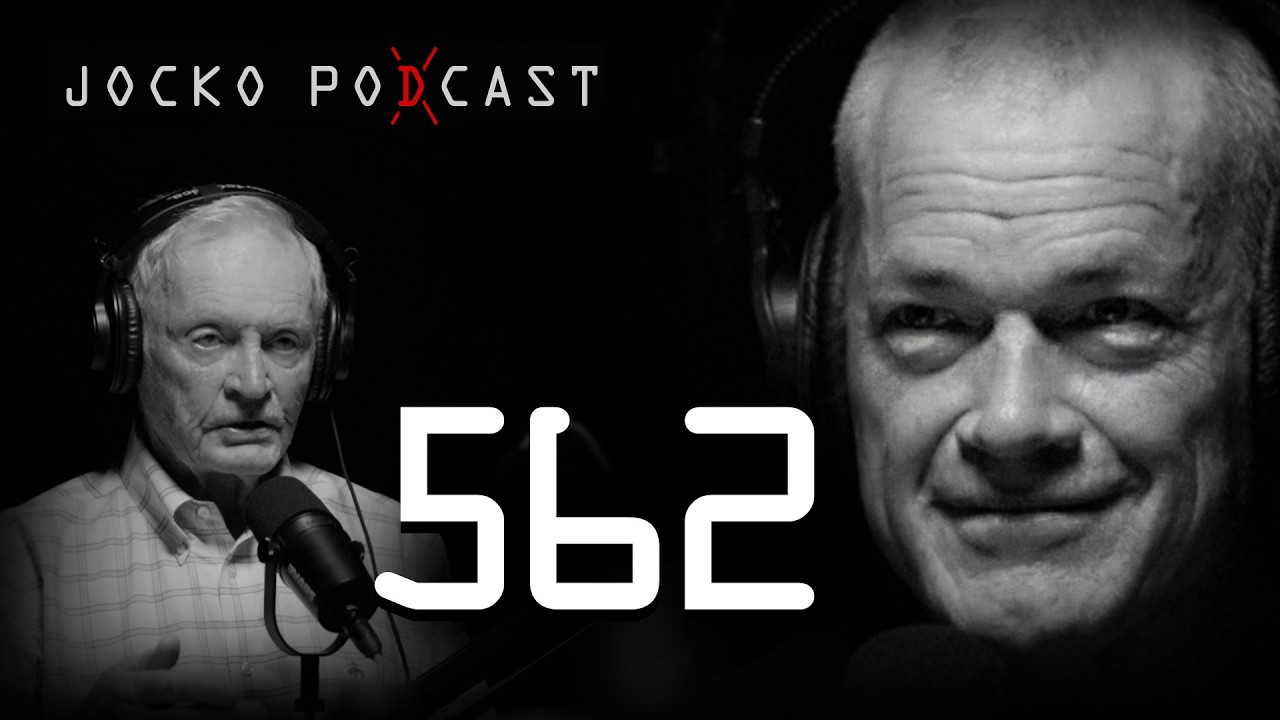
What happened in this episode?
Jocko Willink speaks with military author and former Reagan-era Pentagon official Bing West about what West characterises as recurring leadership failures across Vietnam, Iraq and Afghanistan, and the risks he sees ahead. West recounts his Vietnam service, including work that fed into the Marine Corps’ small-unit training guidance, and argues that US strategy was distorted by senior-level assumptions about attrition and political will. He describes sharp inter-service antagonism in Vietnam and offers a critical view of President Lyndon B Johnson’s decision-making, including a second-hand account of Johnson berating the Joint Chiefs.
On Iraq, West discusses the 2003 push to Baghdad and describes a combat command relief he attributes to exhaustion and deteriorating judgement. He also alleges that Fallujah policy swung between escalation and a ceasefire because of emotional decision-making and political pressure at the top, with consequences he says favoured insurgent leaders. On Afghanistan, West attacks the feasibility of counterinsurgency as practised, pointing to force-to-task maths, Pakistani sanctuary, and what he sees as a lack of candour in reporting progress; he claims a plan to seal Tora Bora’s exits was ignored up the chain.
West’s broader thesis is a “Jupiter complex”: presidents assuming US power makes defeat impossible. He warns about China’s intentions towards Taiwan, argues the US military is moving too slowly towards autonomous warfare, and predicts a looming fiscal squeeze in which debt interest crowds out defence spending.
Key points:
- West argues US Vietnam strategy relied on kill ratios despite Hanoi’s tolerance for heavy losses.
- He relays an account of Johnson rejecting major escalation options and disparaging senior commanders.
- West says Fallujah decisions were driven by emotion and political pressure, with lasting insurgent effects.
- He claims a Tora Bora containment plan was proposed but not actioned.
- West criticises Afghanistan counterinsurgency as mathematically impossible given troop-to-task ratios.
- He says the US is underinvesting in autonomous systems and warns of a debt-driven security crisis.