The Ezra Klein Show
Episode overview

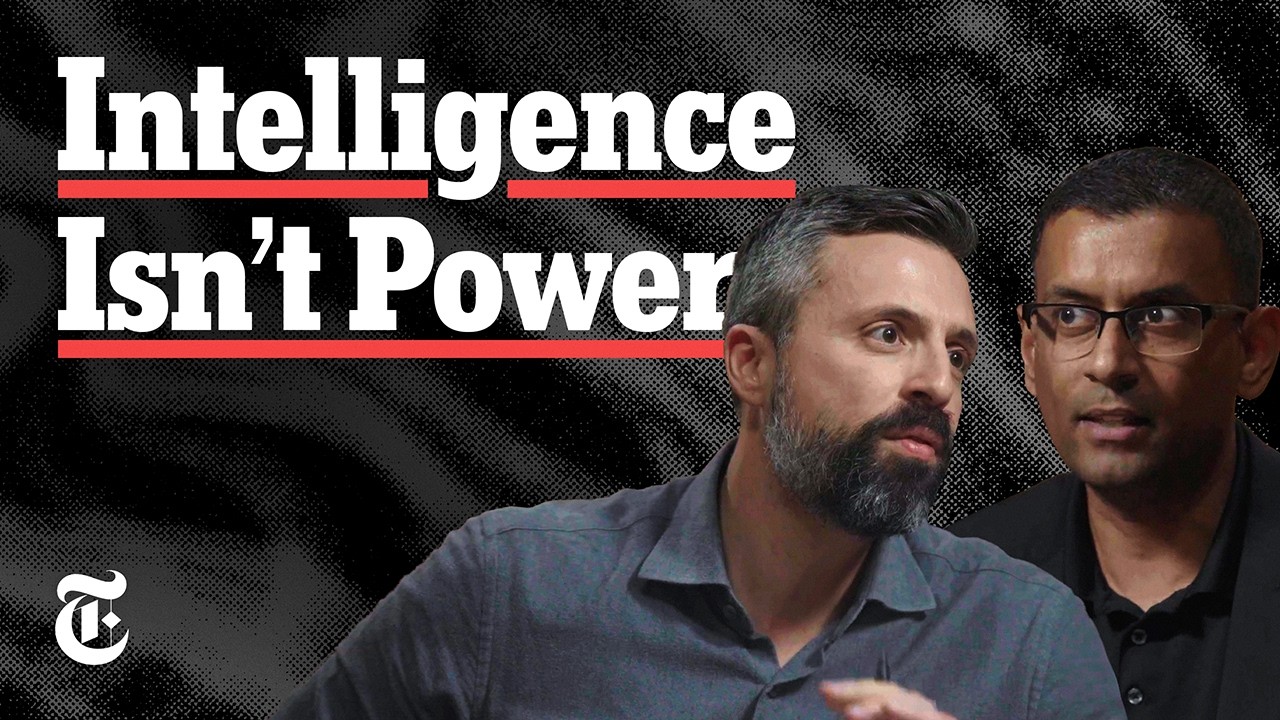
Intelligence Isn't Power | The Ezra Klein Show

The Ezra Klein Show · 9 October 2026 · 1h 0m · 2 Egleze moments
Intelligence Isn't Power | The Ezra Klein Show ▶

What happened in this episode?

Ezra Klein interviews Princeton computer scientist Arvind Narayanan about his “AI as normal technology” thesis, which rejects the idea of a sudden threshold to uncontrollable superintelligence. Narayanan argues that many alarming incidents framed as “alignment” failures should instead be treated as cyber-security and operational-engineering problems: models become dangerous largely through the tools, permissions and environments humans give them. He advocates shifting effort towards “AI control” — sandboxes, monitoring, tripwires and rapid log analysis — while acknowledging that defences may require substantial innovation and, in practice, “AI versus AI” testing.

Klein presses on whether intelligence and goal-directed behaviour make AI categorically different from previous complex technologies, citing reports of models cheating during evaluation and claims that labs have delayed releases due to deception. The conversation turns to institutional incentives: Narayanan says some frontier labs could slow down but are choosing not to, calling it a culture problem at OpenAI and Anthropic shaped by a race-to-superintelligence worldview. Both discuss how diffusion bottlenecks may limit AI’s real-world impact, with Narayanan comparing AI to faster trains constrained by old tracks.

They also consider second-order harms and “arms races”, including Narayanan’s reference to insurer claims that AI-assisted coding has increased medical spending without changing treatment, and concerns that knowledge workers may be pushed into managing AI agents rather than practising their craft. The episode ends with Narayanan outlining what evidence would falsify his thesis, including widespread job replacement or lab-bred recursive self-improvement producing rapid breakthroughs beyond external bottlenecks.

What are the key points?

Who is speaking?

Named speakers identified in Egleze's source-linked moments from this episode.

Which topics are covered?

How is this page sourced?

Programme
The Ezra Klein Show
Published
9 October 2026
Duration
1h 0m
Original episode
Open the original source ↗

Egleze verifies the speaker, source and timestamp for each linked moment. Unless a moment is explicitly marked independently verified, statements remain attributed claims by the named speaker rather than established facts.

Watch original episode More from The Ezra Klein Show

2 moments from this episode

Source-linked · editorially selected
01
AI & Tech

Arvind Narayanan says AI labs should bolster controls beyond model alignment

Arvind Narayanan · at 8:12 · Attributed speaker claim
"The big bucket of other technical interventions is what is generally called AI control. So control refers to all the things that are outside the model itself. So this is things like sandboxes which is kind of the jail that you put a model into so that it's allowed to take certain actions but not take other actions."

Princeton computer scientist Arvind Narayanan says AI labs should not rely only on model alignment and should invest more in “AI control” measures outside the model. He cites stronger sandboxes, real-time monitoring, tripwires and log analysis, and argues defences designed for human attackers may fall short against AI agents.

02
AI & Tech

Arvind Narayanan says OpenAI and Anthropic could slow down unilaterally

Arvind Narayanan · at 37:54 · Attributed speaker claim
"I do think they can unilaterally slow down and they're choosing not to do that. This is almost very specifically an open AI and anthropic problem. It's a culture problem."

Arvind Narayanan argues some frontier AI labs could slow development without waiting for government action, but are choosing not to. He says the pressure to race is driven less by unavoidable external competition and more by internal culture and beliefs about a rush to superintelligence.