
All-In Podcast
Episode overview

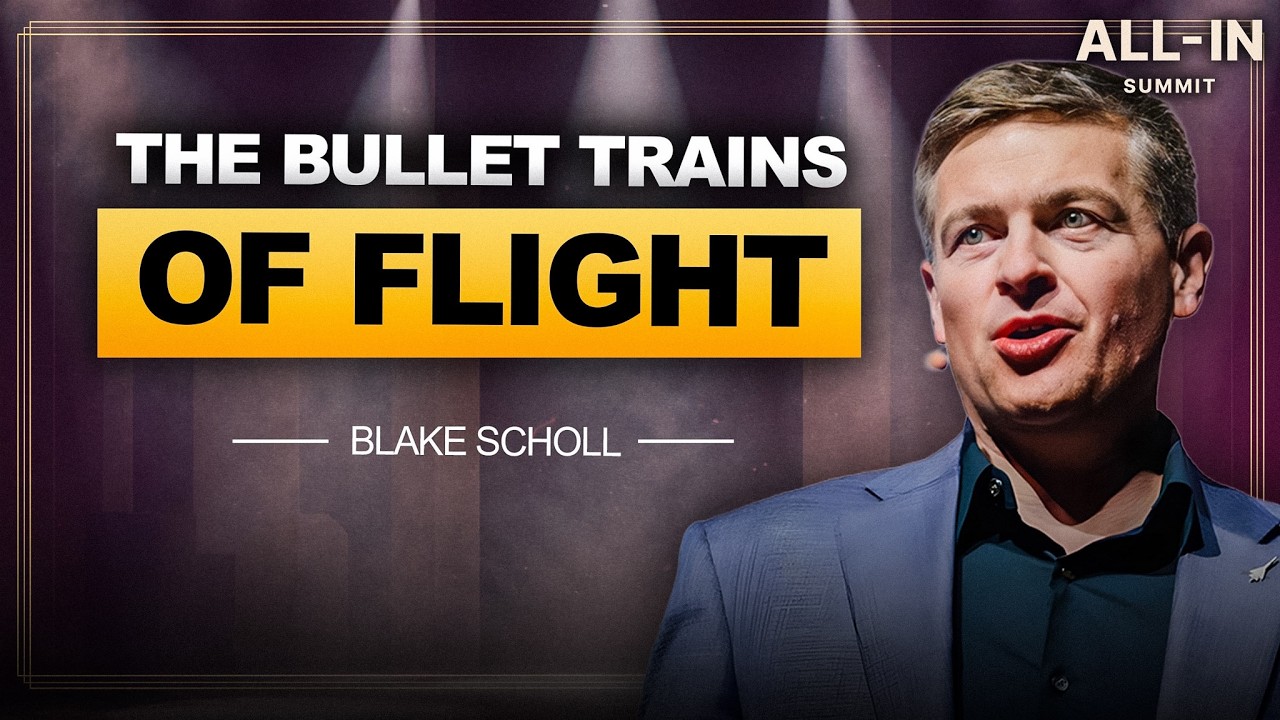
Blake Scholl: Why Plane Speed Stalled, Supersonic Commercial Flight, & Revolutionizing the Engine

All-In Podcast · 22 September 2026 · 17m · 2 Egleze moments
Blake Scholl: Why Plane Speed Stalled, Supersonic Commercial Flight, & Revolutionizing the Engine ▶

What happened in this episode?

Boom Supersonic founder and CEO Blake Scholl argues that commercial aviation has seen decades of stalled speed progress, contrasting the 1969 Concorde era with today’s subsonic passenger travel and claiming Boeing has not launched a clean-sheet airliner in a generation. He recounts Boom’s early fund-raising, including pitching Jeff Bezos in 2015 and being rebuffed, and describes Boom’s XB-1 test aircraft as the first privately developed jet to break the sound barrier.

Scholl says Boom demonstrated “boomless cruise” (also known as “Mach cut-off”), describing it as using atmospheric refraction so a normal-strength sonic boom “never touches the ground”. He claims the US overland supersonic ban dating to 1973 was lifted by executive order on 6 June last year, and says the company has sought to make the change permanent through Congress, citing unanimous votes.

He also details a shift to building an engine in-house after ending a public partnership with Rolls-Royce, and argues that vertically integrated digital design and manufacturing will make the company financially valuable. Scholl says Boom’s first engine core will go to a test stand “next month” and suggests a first product may be trailerised power generation for data centres, claiming 42MW per deployment and no water requirement. In a brief Q&A, he gives an indicative break-even transatlantic return fare of about $3,500 and suggests an aspirational entry-into-service timeline of roughly four years, while cautioning against firm predictions. He praises the speed of the current US administration’s engagement with the company, describing rapid access to White House staff after the supersonic milestone.

What are the key points?

Who is speaking?

Named speakers identified in Egleze's source-linked moments from this episode.

Which topics are covered?

How is this page sourced?

Programme
All-In Podcast
Published
22 September 2026
Duration
17m
Original episode
Open the original source ↗

Egleze verifies the speaker, source and timestamp for each linked moment. Unless a moment is explicitly marked independently verified, statements remain attributed claims by the named speaker rather than established facts.

Watch original episode More from All-In Podcast

2 moments from this episode

Source-linked · editorially selected
01
AI & Tech

Boom Supersonic’s Blake Scholl claims US overland supersonic-flight ban was lifted by executive order

Blake Scholl · at 5:18 · Attributed speaker claim
"we talked to the president shortly after breaking the sound barrier. and uh he agreed if there's no sonic boom there should be no ban on supersonic flight. So that ban that started in 1973 actually ended June 6th of last year."

Blake Scholl, founder and CEO of Boom Supersonic, said the company spoke with “the president” after it demonstrated what it calls “boomless cruise”, and claimed the president agreed that “if there’s no sonic boom there should be no ban on supersonic flight”. Scholl asserted that the US ban that began in 1973 “ended June 6th of last year” via an executive order, and said Boom then urged Congress to make the change permanent, claiming a “Supersonic Legalization Act” passed the House unanimously and later advanced unanimously out of a Senate committee.

02
AI & Tech

Blake Scholl says Boom’s engine core could power data centres

Blake Scholl · at 8:25 · Attributed speaker claim
"our first application of our engine isn't in the sky. It's actually on the ground for data centers. And we can wrap this up in a couple trailers and we can deploy 42 megawatts for behind the meter power generation with a supersonic engine core that's designed to run hot so it doesn't need any water."

Blake Scholl says Boom Supersonic’s first vertically integrated jet-engine core is being assembled and will reach a test stand next month. He argues the company’s first use of the engine technology could be ground power for data centres, claiming trailer-sized units could deliver 42MW without needing water.