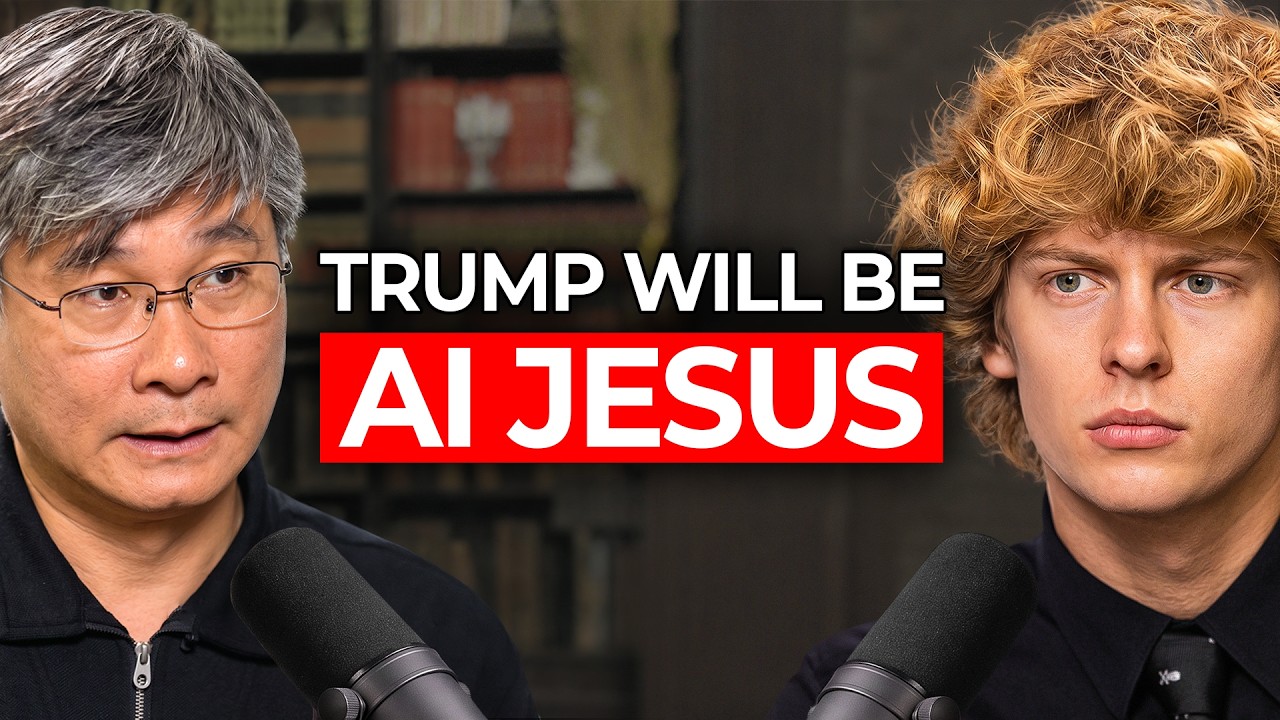
What happened in this episode?
Jack Neel interviews “Professor Jiang”, who advances a broad thesis that firms such as Palantir aim to merge disparate datasets into a single predictive system capable of monitoring and shaping behaviour. Jiang argues large-scale integration faces technical and social constraints, and he speculates that public compliance could be driven through quasi-religious narratives centred on an “AI Jesus”.
A major portion of the episode focuses on US politics and surveillance. Jiang alleges—without providing documentary evidence—that Donald Trump’s proposed White House ballroom project is actually a data centre, claiming the contractors and excavation depth suggest this and that an underground facility would be protected by executive privilege. He further argues such a facility could function as a private intelligence apparatus.
Jiang also claims, again without evidence, that consumer-facing AI systems are heavily influenced by humans “somewhere in India”, and he discusses human involvement in machine-learning systems more generally. He offers a series of speculative predictions about a possible third Trump term, including loyal federal forces and an explicitly theocratic turn.
Later, Jiang gives personal background, describing childhood trauma and dissociation, and frames his public work as a “mission”. He discusses eschatology, Freemasonry, and the idea that beliefs can be used to shape political reality, while repeatedly presenting parts of his account as game-theory reasoning rather than confirmed fact.