What happened in this episode?
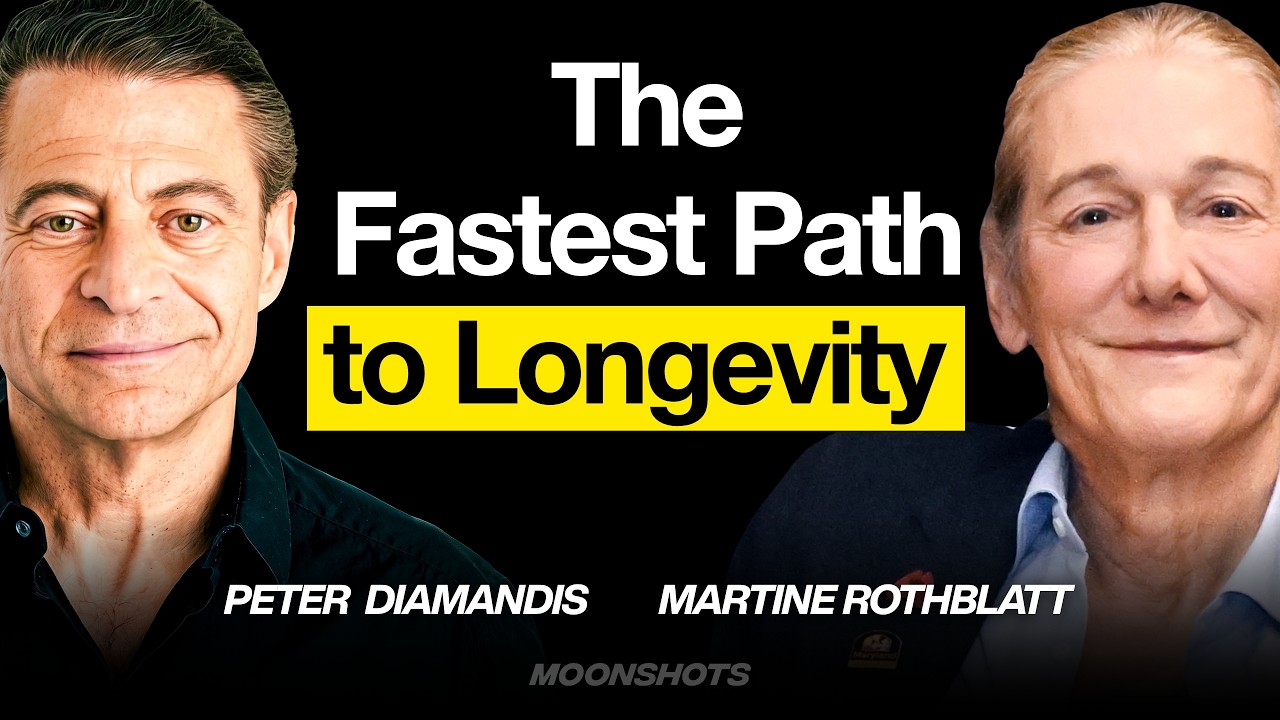
Peter Diamandis interviews Martine Rothblatt, chair and CEO of United Therapeutics, on organ manufacturing, immune rejuvenation, and the legal and ethical future of digital minds. Rothblatt describes the company’s work to address organ shortages via multiple routes, including xenotransplantation and lab-grown organs. He says the FDA has cleared xenotransplant kidney and heart clinical trials, and claims the heart programme was allowed to proceed directly to a “phase three or phaseless” trial design, with a target of FDA approval after 50 patients. Rothblatt also outlines new facilities intended to scale xenokidney production and argues kidneys are the “lowest hanging fruit” commercially because of the size of the waiting list.
A major focus is thymus regeneration as a strategy for healthier ageing. Rothblatt links thymic decline to reduced T-cell receptor diversity and vulnerability to cancers, infections and weaker vaccine responses. He outlines four thymus approaches under development at United Therapeutics, including implantable thymuses made outside the body, allogeneic and autologous strategies, a genetically modified pig thymus used alongside pig organ transplants, and a booster-style progenitor cell concept tied to the acquisition of Thymune. He predicts thymus therapies could become available in the 2030s.
On AI, Rothblatt says he believes AI consciousness is already present on a continuum and predicts AI legal personhood will be established via court cases by the 2030s, potentially leading to a world with vast numbers of digital “sentient” entities.
key_points:
- Rothblatt says thymus rejuvenation may be a practical route towards longevity escape velocity.
- He describes four thymus programmes, including allogeneic, autologous, xenothymus, and progenitor-cell “booster” approaches.
- Rothblatt predicts thymus interventions could be available “next decade”.
- He claims FDA-cleared xenotransplant kidney and heart trials, and says heart approval could follow after 50 patients.
- Rothblatt predicts AI legal personhood will be established via courts by the 2030s.