What happened in this episode?
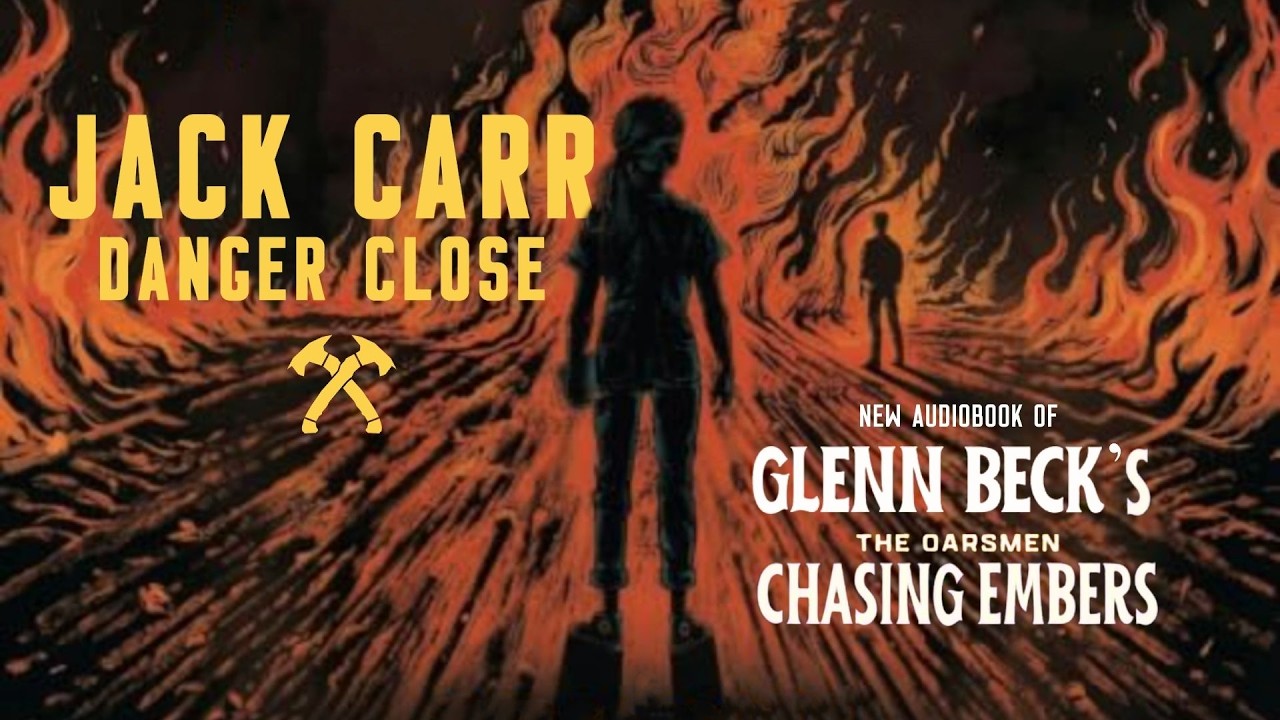
Jack Carr interviews Glenn Beck around Beck’s novel Chasing Embers and a broader argument that long-form reading is in decline and that this weakens critical thinking and empathy. Carr cites figures from an Atlantic article on falling leisure reading and contrasts them with rising online gambling; both men argue that attention-driven platforms reward polarisation and discourage deep engagement. Beck warns that generative AI can become a “shortcut” that discourages learning, while also describing a personal use case: using AI tools to realise music he hears internally despite not being able to read or play music.
Beck makes a specific prediction that entertainment will become dynamically personalised, with devices monitoring viewers’ reactions — potentially including biometric signals — and AI adjusting a story in real time, further fragmenting shared experiences. On Chasing Embers, Beck outlines a dystopian premise in which books are banned and history must be preserved through memorisation and clandestine copying; he says later instalments will involve AI as a controlling force.
He also describes a long-term personal mission to procure and preserve original American historical documents and cultural artefacts, claiming much of his most valuable material is stored in two mountain vaults, modelled on the preservation logic behind the Dead Sea Scrolls. In an emotional section, Beck reflects on fame, online hostility, and the family costs of public life, including children’s exposure to security-related threats and his regret at being insufficiently present.