
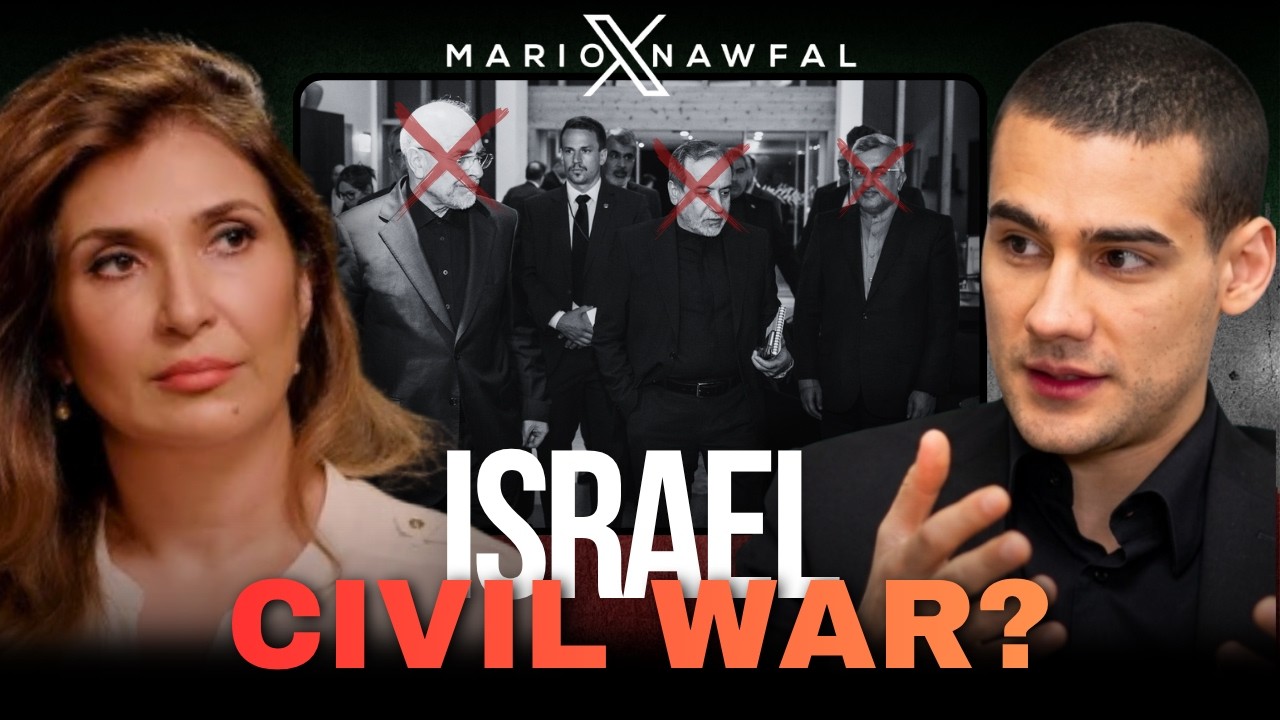
Mario Nawfal Interviews
Episode overview

The "Political Assassination" Threat Hanging Over Israel - w/ The Cradle’s Sharmine Narwani

Mario Nawfal Interviews · 6 July 2026 · 10m · 2 Egleze moments
The "Political Assassination" Threat Hanging Over Israel - w/ The Cradle’s Sharmine Narwani ▶

What happened in this episode?

In a detailed discussion of Middle East politics, journalists analyze the deepening internal crisis in Israel and the fragile Lebanon-Israel ceasefire agreement. The conversation reveals that approximately 60% of Israelis now view civil war as a real threat, with nearly 80% of Israeli Jews describing the past year as horrible for society. Top Israeli officials have reportedly warned of an impending political assassination similar to the 1995 killing of Prime Minister Yitzhak Rabin, driven by deep divisions between right-wing settlers now in government and their opponents. These tensions pre-date the October 7th attacks, stemming from massive protests against Netanyahu's judicial reform efforts. The discussion then turns to Lebanon, where the speakers characterize the government as a collaborationist Vichy-style regime implementing an unsustainable ceasefire deal with secret annexes that effectively exclude the Shia population from consideration. They note that Hezbollah consistently wins the largest share of votes in Lebanese elections despite a complex electoral system. The conversation explores the broader geopolitical struggle between Western orientation and eastward alignment toward Asia's growing economic power, with Lebanon caught between American pressure, Iranian influence, and the reality that Hezbollah was born from Israeli invasion and occupation. One speaker shifts their previous position on Hezbollah disarmament, acknowledging that Iran won the war and that practical realities make disarmament unfeasible without risking civil war, though both agree any solution must maintain deterrence against Israeli aggression.

What are the key points?

Which topics are covered?

How is this page sourced?

Programme
Mario Nawfal Interviews
Published
6 July 2026
Duration
10m
Original episode
Open the original source ↗

Egleze verifies the speaker, source and timestamp for each linked moment. Unless a moment is explicitly marked independently verified, statements remain attributed claims by the named speaker rather than established facts.

Watch original episode More from Mario Nawfal Interviews

2 moments from this episode

Source-linked · editorially selected
01
Geopolitics

Two-Thirds of Israelis Now View Civil War as Real Threat to Country

at 0:02 · Attributed speaker claim
Almost two-thirds of the Israeli population believes that the country is moving towards a civil war situation. Almost 80% of Israeli Jews describe the past year as having been horrible for society and very pessimistic for the future of the country.

A journalist reports that approximately 60% of Israelis now see civil war as a genuine threat, with nearly 80% of Israeli Jews describing the past year as horrible for society. The tensions stem from deep internal divisions that existed before October 7th, including massive protests against Netanyahu's judicial reforms and conflicts between different political factions. Major Israeli officials predicted over a year ago that a political assassination similar to the Rabin killing was likely.

02
Geopolitics

Lebanese Government Accused of Selling Out Shia Population in Israel Deal

at 3:42 · Attributed speaker claim
The Lebanese government is pretty much a Vichy government. They are doing whatever the Americans and Israelis are asking from them. This is why you have secret annexes to this deal. They're basically selling out an entire segment of their population.

A journalist characterizes the Lebanese government as a collaborationist regime implementing a Lebanon-Israel ceasefire deal with secret annexes that betray the country's Shia population. The analysis suggests the deal cannot be implemented practically and that the Lebanese government excluded Shia citizens from consideration, creating an unprecedented governance crisis. Hezbollah has consistently won the largest share of votes in Lebanese elections, making the government's position particularly untenable.