What happened in this episode?
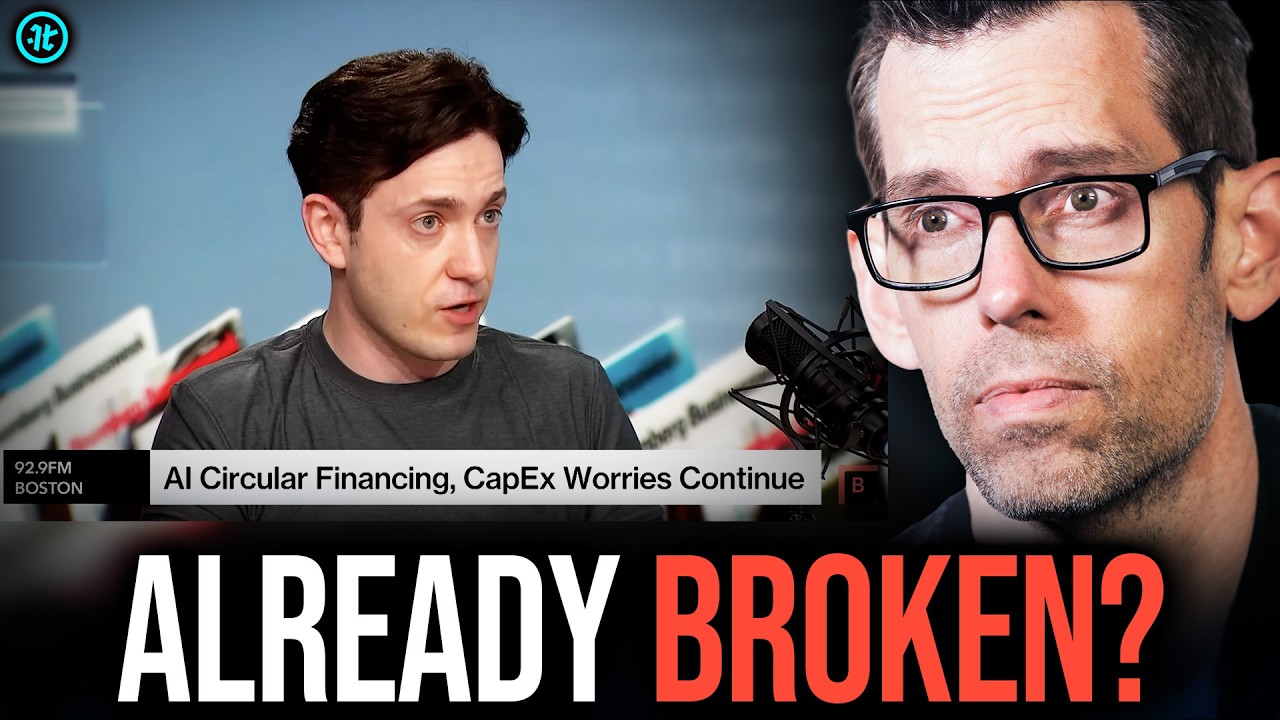
Tom Bilyeu reacts to comments by researcher Ed Zitron warning that parts of the AI investment boom may be masking concentrated financial risk. Zitron cites bank research he says shows a growing share of hyperscalers’ cloud revenue tied to OpenAI and Anthropic, arguing that markets may be treating AI demand as broad-based when it is heavily dependent on a small number of cash-burning customers. He also claims OpenAI materially contributed to Microsoft’s Intelligent Cloud growth in 2025.
Zitron describes OpenAI as “burning cash”, alleging a $20.9bn loss in 2025 and asserting that more than $800m of revenue came from SoftBank for a “Crystal Intelligence” programme he says shows little evidence of real-world activity. He further argues that the commercial structure between hyperscalers and the leading AI labs can involve circular incentives, likening the ‘smart people’ defence to the Enron-era “smartest guys in the room” dynamic.
Bilyeu adds his own interpretation of how high-risk AI-related lending could become systemic, outlining mechanisms he says move exposure from banks into markets via private credit and structured products, and repeatedly frames the core question as whether AI revenues arrive before debt burdens bite. The episode mixes financial literacy explainer segments with allegations about AI-company sustainability and the political risk of treating advanced AI as too strategically important to fail.