What happened in this episode?
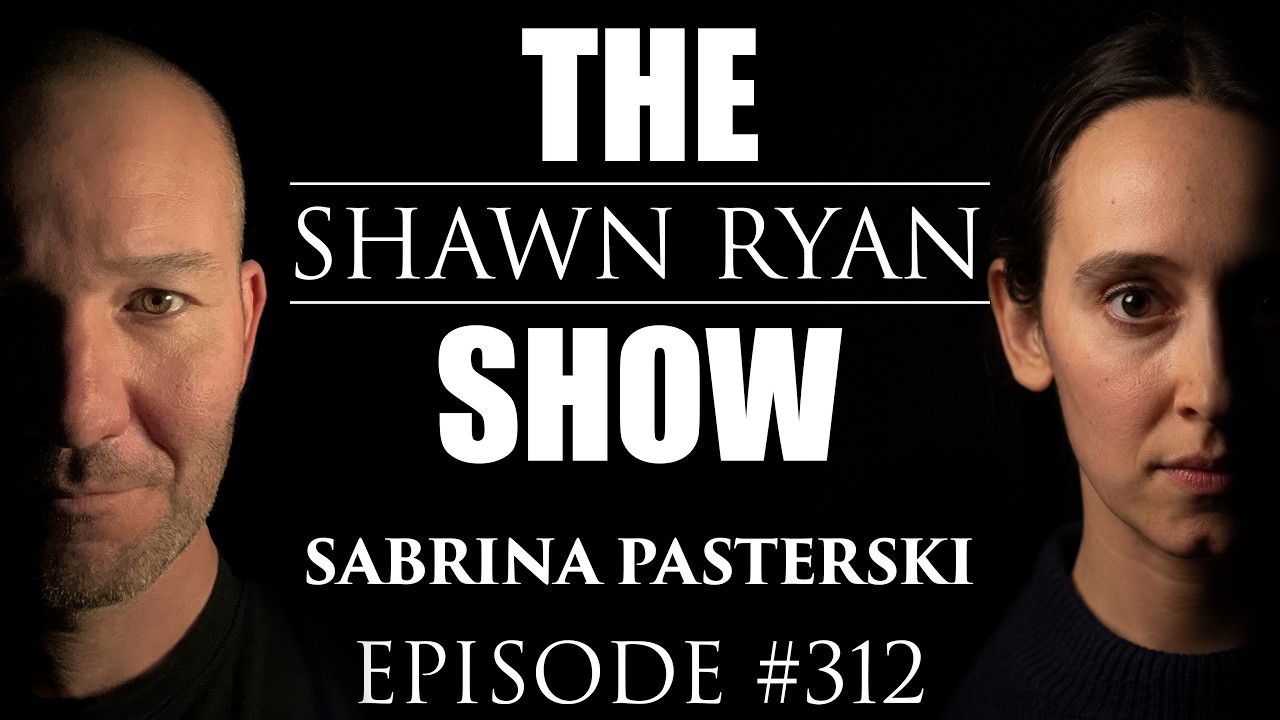
Sean Ryan interviewed Sabrina Gonzalez Pasterski, a 32-year-old theoretical physicist leading the Celestial Holography Initiative at Canada's Perimeter Institute, in a wide-ranging conversation covering her unconventional path into physics, her controversial public reputation, and her cutting-edge work attempting to prove the universe is a hologram. Pasterski, who built a functioning airplane between ages 12 and 14 and was initially rejected by Harvard before getting off the MIT waitlist, explained that she entered physics not out of passion for the field but because her aerospace heroes—Elon Musk and Jeff Bezos—liked physics. Dubbed the 'next Einstein' by media in 2015, she admitted the label is undeserved, has hurt her standing within the insular string theory community, and benefits her too much. The core of the episode focused on her research into celestial holography and gravitational memory effects: the idea that spacetime events leave permanent 'indentions' in the fabric of space and that the entire 4D universe can be encoded as information on a 2D boundary, analogous to a hologram. Pasterski described her early collaboration with Stephen Hawking and her discovery of the spin memory effect, which relates angular momentum loss in colliding black holes to observable shifts in distant detectors. She discussed the tension between quantum mechanics and general relativity and explained how holographic principles—imported from string theory and black hole thermodynamics—may unite them. Pasterski was candid about disillusionment with both academia and tech hype, revealing she once resented figures like Elon Musk for over-promising on quantum computing and other buzzword-driven ventures, but has since become enthusiastic about AI coding tools like Claude, which allow her to prototype research software without hiring developers. She addressed the US-China physics race, asserting the US remains ahead but acknowledging China's ability to fund large experiments through top-down governance. On UFOs, she dismissed sightings as likely misidentifications or classified tech, saying she wishes aliens were real but sees no evidence of contact. The episode closed with her vision for using AI to parse and compress the vast corpus of theoretical physics research, moving the field away from isolated individual breakthroughs toward collaborative, systematic progress.